ServicesWhole-house carbon filtration
Whole-House Carbon Filtration in Flower Mound
When your tap water smells like a swimming pool or showers leave your skin feeling tight, one carbon system on the main line treats every faucet at once. We match the tank to how your family uses water, keep the work area tidy and leave you with an easy filter schedule.
How whole-house carbon filtration helps
City water gets disinfected so it is safe by the time it reaches you. That matters, but the chlorine or chloramine doing that work can leave a harsh taste and odor. A whole-house carbon filter is installed where water comes into the house and traps those disinfectants before they get to a faucet, shower or ice maker.
Activated carbon works through adsorption. Its surface is covered with tiny pores that grab chlorine and many taste and odor compounds as water flows past. For homes on chloramine, we use catalytic carbon, which removes it much better than standard carbon.
It is a good choice when the problem is taste, odor or dry skin and hair after a shower. For extra treatment of drinking water, we add under-sink reverse osmosis. Don't know what is in your water yet? Begin with water testing, and we will tell you straight whether carbon is the answer.
What comes with your installation
Sized for your household
We count your bathrooms, check the size of your main line and ask about your family's water use. An undersized tank pushes water past the carbon too fast, so it filters less and wears out early.
Carbon matched to your water
Standard granular carbon handles chlorine, and catalytic carbon handles chloramine. We find out which your supply uses before picking the media.
Prefilter for sediment
A small prefilter traps grit and sand first, helping the carbon last and keeping pressure steady. If you see heavier particles or staining, we may steer you toward iron and sediment filtration.
A bypass valve
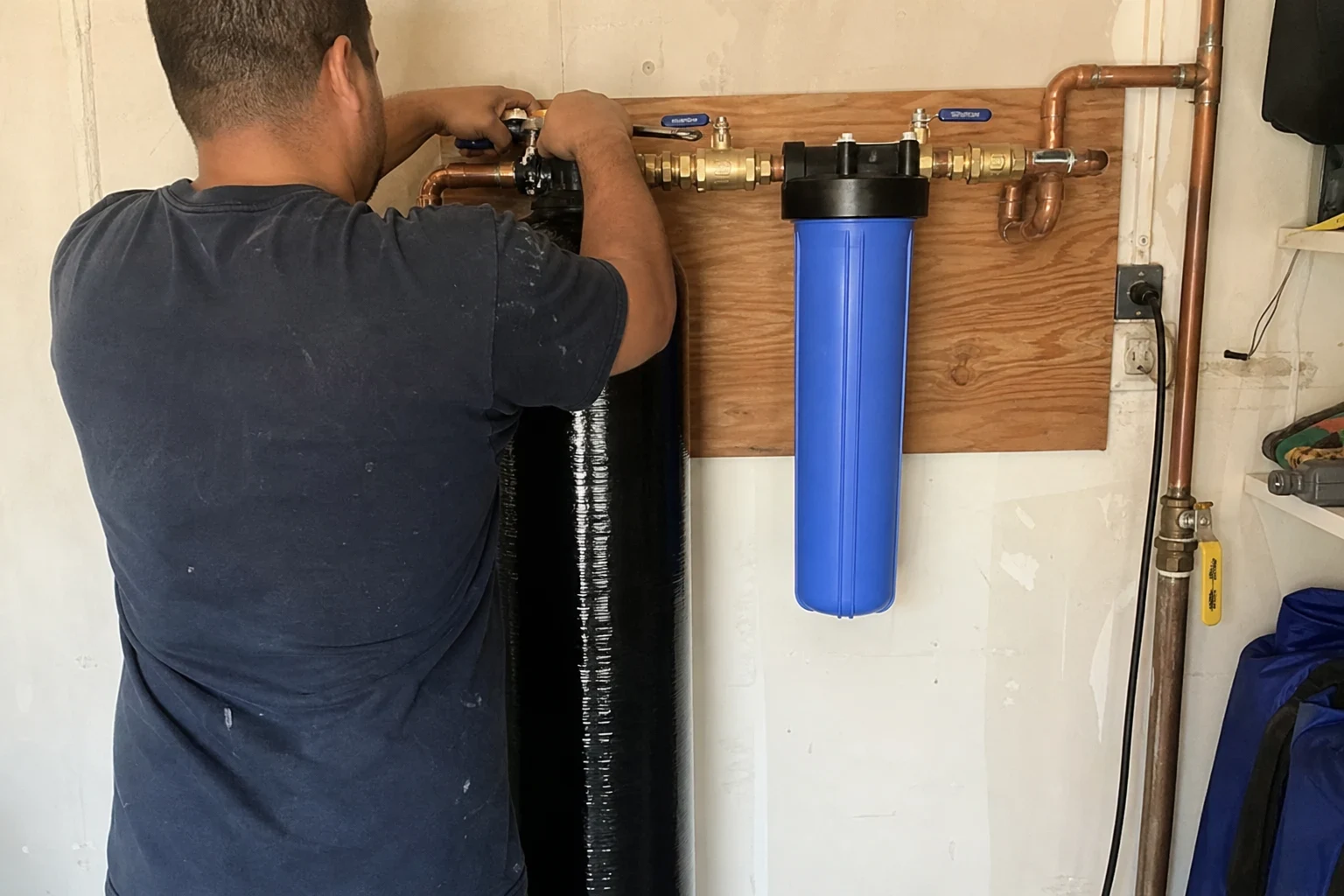
We add a bypass so your home still has water during filter changes or service. A cartridge swap never means shutting off the whole house.
Tidy install and walkthrough
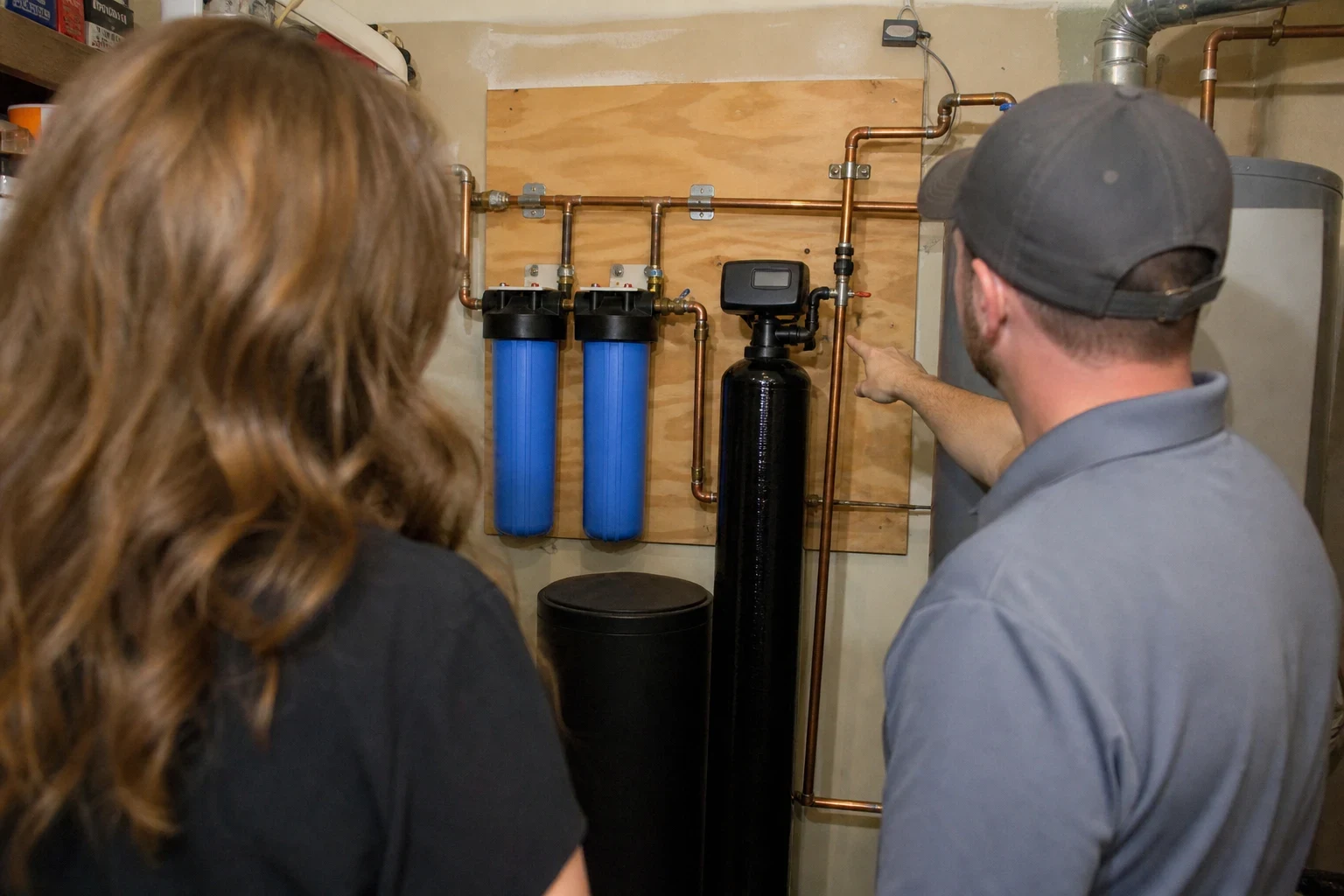
We cover the floors, flush the new media until the water runs clear and clean up afterward. Then we point out the valves and tell you when the next change is due.
Signs your home could use carbon filtration
A pool smell at the tap
A chlorine odor when you fill a glass or run a hot shower is the most common reason people call us. Carbon removes it at every tap at once.
Dry skin and hair after showers
Many people notice their skin feels tight and hair feels brittle after bathing in chlorinated water. Filtering the whole house means the shower gets treated too, not just the kitchen.
Coffee, tea and ice taste off
If drinks taste flat or chemical, the water is usually the cause. Carbon filtered water lets the flavor come through.
You are buying a lot of bottled water
Hauling cases home every week adds up. Filtered water from every tap is easier on your back and on the recycling bin.
Taste changes with the season
Some households notice the smell gets stronger when water warms up in summer. A whole-house filter keeps the taste steady year round.
How install day goes
- 1
A conversation by phone
We ask about what you are noticing, how many people live in your home and where your main water line comes in. If testing makes sense first, we say so.
- 2
Look at your home and plan the spot
Most systems go in the garage or near the main shutoff. We check for room, a drain if one is needed and how to protect the unit from Texas summer heat and winter freezes.
- 3
Written estimate
You get a line-item estimate covering the system, media, parts and labor. Nothing gets added on install day without your okay.
- 4
Installation
We shut off the water briefly, cut into the main line, install the prefilter, carbon tank and bypass, then restore water. Most installs take a few hours, and you have water back the same day.
- 5
Flush, check and schedule
We flush the new carbon, check for leaks and test pressure at a few faucets. Then we set your first filter change on the calendar so it lines up with the season.
What changes the price
No two homes are quite alike, so we price each job once we understand your setup. The written estimate breaks out every part and the labor so you can see where each dollar goes. These are the biggest factors.
- Size of the system
- Extra bathrooms and heavier water use need a bigger tank and more carbon. A larger system costs more at the start but goes longer between changes.
- Carbon type
- Catalytic carbon for chloramine is pricier than standard carbon, and we suggest it only when your water needs it.
- Location of your main line
- A line that is easy to reach in the garage makes for the simplest install. Rerouting, extra fittings or outdoor protection take more time and parts.
- Extras
- A sediment prefilter usually comes with the job. Adding reverse osmosis, or a softener after a hardness test, is quoted separately.
Questions about whole-house carbon filtration
Something not covered here? (972) 200-8416
Will a carbon filter lower my water pressure?
Not if the tank matches your home. When people do notice weaker flow, it almost always traces back to a system that is undersized for the household or a prefilter clogged with grit. We avoid both by sizing to your bathrooms and main line, then running several faucets after install to confirm the flow is where it should be.
How often does the carbon need replacing?
It depends on the size of the system and how much water your home uses. Cartridge systems need changes more often than larger tank systems. We give you a schedule on install day, and our filter replacement and maintenance service can handle the changes for you.
Does carbon soften water?
No. Carbon targets chlorine, taste and odor, not the minerals that cause hardness. If you see scale on fixtures, a hardness test will tell us whether a softener is worth it for your home.
Do I still need a drinking water filter?
Many families are happy with carbon alone. If you have older plumbing or want extra treatment for cooking and drinking, an under-sink reverse osmosis system adds another layer at the kitchen sink.
Is there a good time of year to install?
Any time works, but many people like to get it done before summer, when the household drinks more water and hot showers are not the only thing running. Spring installs also mean your first filter change lands before the busy holiday season.
Get clean-tasting water from every tap
Tell us what you are noticing and how your home is set up. We will recommend the right size and carbon type, and give you a clear written estimate.