ServicesWater softeners
Hardness Testing First, Then Water Softeners in Flower Mound
A softener is only worth having when your water is hard enough to cause problems. We test your home's water first, share the number with you and give you a plain answer on whether a softener makes sense. If it does, we size and install one to match.
Let the hardness numbers decide, not a salesperson
A water softener pulls out calcium and magnesium, the minerals behind white buildup on faucets, spotted glasses and scale in the water heater. With high hardness, softeners do their job well. With low or moderate hardness, you get extra salt, upkeep and expense for little difference, and we would rather say so at the start.
That is why each softener job begins by testing hardness at your tap. We read the result in grains per gallon, test for iron in the same visit and explain what the numbers mean for your house. Some homes need a softener. Others do better with whole-house carbon filtration or iron and sediment filtration, and a few need no treatment.
We prefer to sort this out ahead of the hot season. North Texas summers raise water use, and a water heater working hard all summer collects scale faster on hard water.
What a softener job includes
Hardness and iron test
We measure hardness and iron at your tap before recommending anything. Iron matters because it can foul a softener's resin if nobody plans for it.
Sizing to your household
We size the unit from your hardness reading and how many people live in your home. A softener that is too small regenerates constantly and wastes salt. One that is too large costs more than it needs to.
Installation at the main line
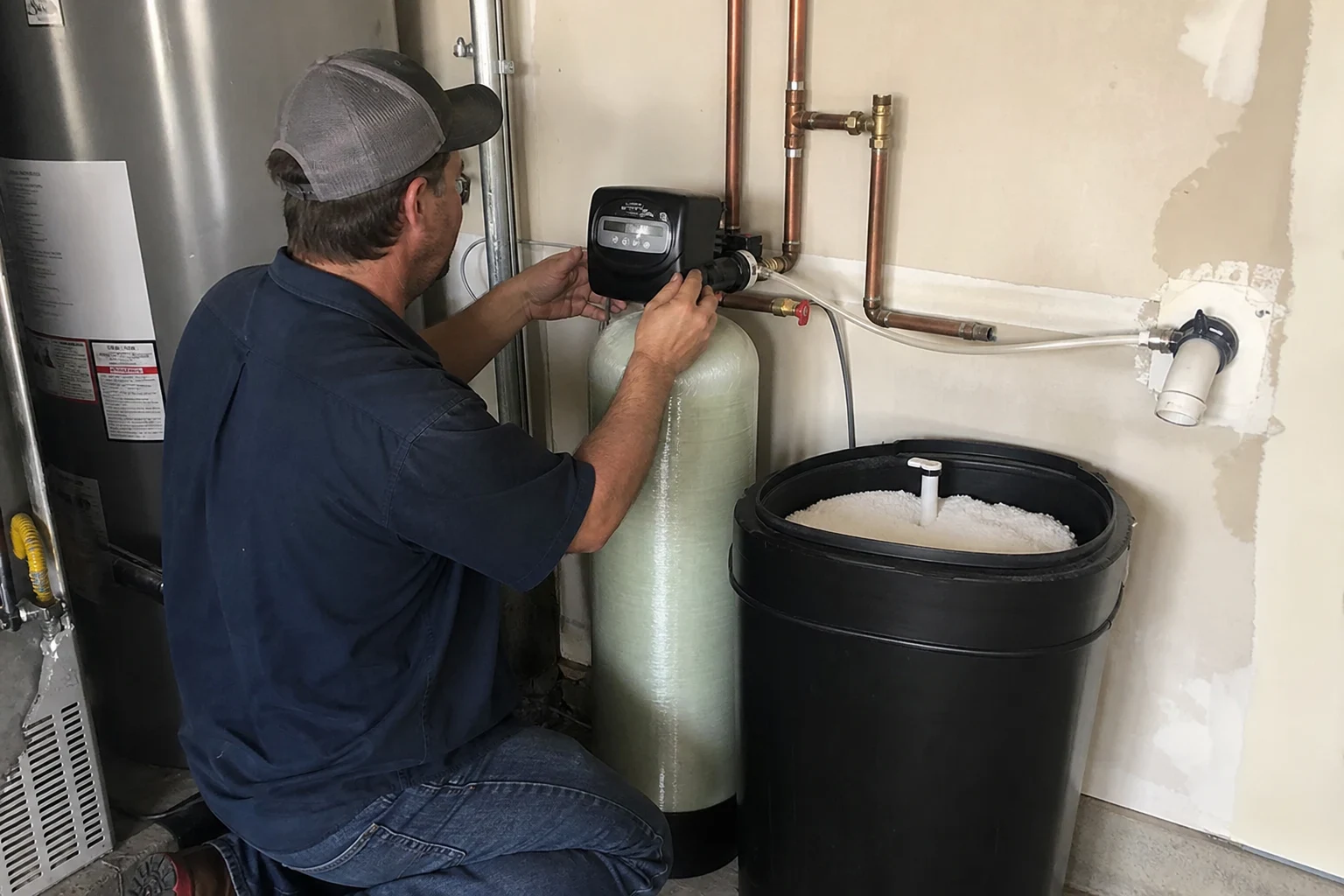
We install the softener where water enters your home, usually in the garage, with a bypass valve so you can shut it off for service. We add a proper drain line for regeneration and protect floors and walls while we work.
Setup and first regeneration
We program the control valve to your hardness and household size, add salt, and run the first cycle with you there. You will know how to check the salt and read the display before we leave.
Cleanup and a written summary
We clean up the work area and leave you your test results, the settings we used and what upkeep to expect.
Signs a hardness test is worth doing
White crust on fixtures
Chalky buildup on faucets, showerheads and the dishwasher door is the classic mark of hard water.
Spotty dishes and glasses
Cloudy film that comes back after every wash often points to minerals rather than your detergent.
A noisy water heater
Popping or rumbling from the tank can mean scale has settled on the bottom. That scale makes the heater work harder and shortens its life.
Soap that will not lather
Hard water makes soap and shampoo harder to rinse off and leaves skin and hair feeling dry.
Spots on the shower glass
Water marks that dry white and resist scrubbing are a common early clue.
How the work goes
- 1
Talk it through by phone
Tell us what you are seeing at home. We will set a time to come test your water.
- 2
Test and explain
We test at your tap and go over the hardness and iron numbers with you in plain terms. If a softener is not the right fit, we say so and point you to what is.
- 3
Written estimate
If the numbers support a softener, you get a line-item estimate covering the unit, parts and labor. Nothing starts until you agree to it.
- 4
Install day
Most installs take part of a day. Your water is off only while we tie into the main line, and we tell you before we shut it off.
What affects the price of a softener
We cannot give a fair price before we know your hardness and see where the main line enters your home. Once we have tested, your estimate lists each part of the job so you can see where the money goes.
- Your reading and water use
- A higher grain count, or a busy home that runs through a lot of water each day, calls for a bigger resin tank with more capacity. That raises the equipment cost.
- Iron in the water
- Iron may call for a pre-filter or a different resin setup, which adds equipment.
- Plumbing access
- An open garage wall near the main line is simpler than tight space or extra pipe runs to reach a drain.
- Pairing with other filtration
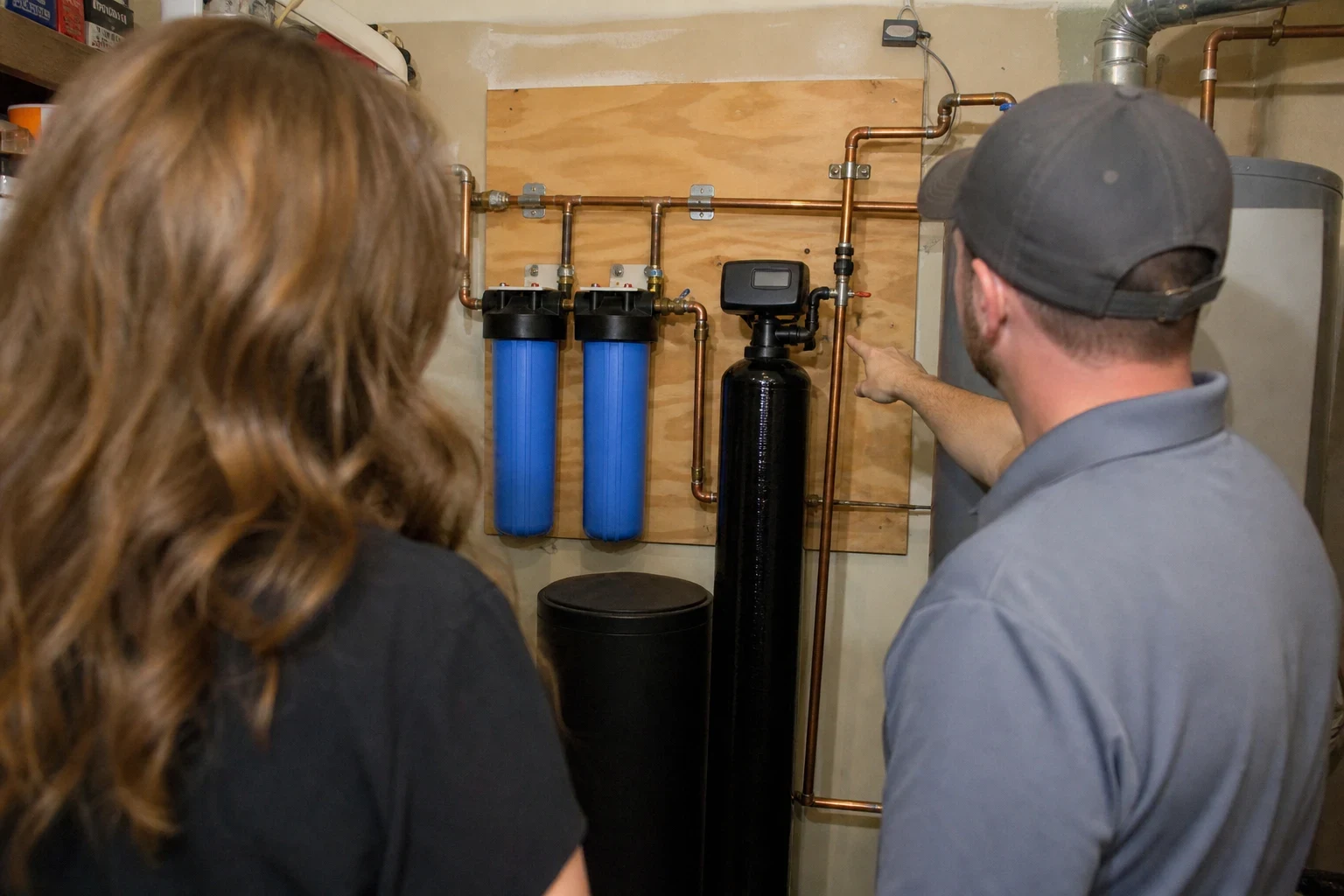
- Adding whole-house carbon filtration at the same time changes the parts list but can save a second visit.
Common softener questions
Something not covered here? (972) 200-8416
Does every home around here need a softener?
No. Hardness differs, and plenty of homes get along fine without one. So we test first and suggest a softener only when your numbers back it up.
Does softened water taste salty?
Softened water carries a little sodium, though most people cannot taste it. If you want drinking water without it, many homes pair the softener with under-sink reverse osmosis at the kitchen sink.
Will a softener take out chlorine or improve the taste?
Not really. Softeners deal with hardness minerals. For chlorine taste and smell, whole-house carbon filtration does the job, and both can go in together.
What upkeep does a softener need?
Mainly topping up salt every few weeks to a couple of months, based on use. We can also look at the unit during filter replacement and maintenance visits so the settings keep up as your household changes.
Can I put the softener in a cold garage?
Yes, provided the unit and lines are kept from freezing. We check the location during the visit and recommend insulation before winter if it is needed.
Find out if a softener is worth it before summer
A quick test tells you whether hard water is really behind the spots and scale. We will give you a straight answer either way.