ServicesUnder-sink reverse osmosis
Under-Sink Reverse Osmosis in Flower Mound
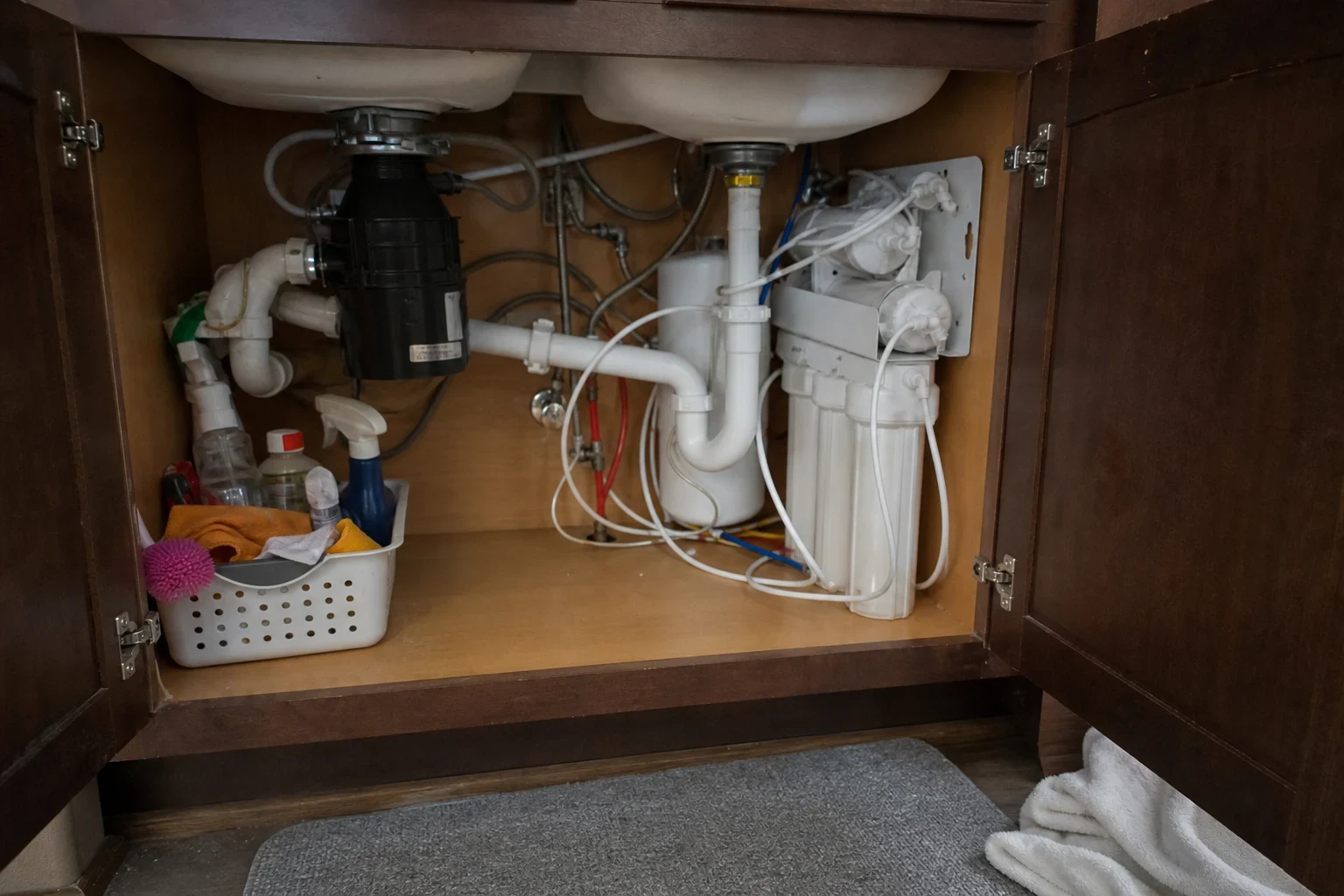
Reverse osmosis gives your kitchen a separate filtered faucet for drinking water, cooking and filling the kids' cups, with a cleaner, crisper taste than the main tap. We check your water first, choose a system that fits your cabinet and your household, and show you how to look after it.
How reverse osmosis works and who it is for
In an RO system, your household water pressure pushes water through a membrane with pores fine enough to hold back dissolved solids, trace metals and many compounds that affect taste. A sediment prefilter and a carbon prefilter come first so the membrane does not foul early. A final carbon filter polishes the taste right before the water reaches its own small faucet next to your main one.
It treats one point of use, not the whole house. That makes it a strong choice when your concern is drinking and cooking water: lead that older plumbing fixtures can add, a chlorine taste you cannot stand, or just wanting more confidence about trace contaminants. If taste and smell bother you at every tap and in the shower, whole-house carbon filtration may be the better place to start, and we will say so.
Lots of families want RO installed ahead of the long Texas summer, when water bottles get refilled all day and the ice maker never stops. Spring is a convenient time to plan for it.
What your installation includes
- A water test before anything is sold
- We start with water testing at your kitchen tap. The results tell us whether RO is the right tool and which stages your water actually needs.
- The full filter train
- A typical system has a sediment prefilter, a carbon prefilter, the RO membrane, a storage tank and a carbon polishing filter. We explain what each one does in plain terms.
- Dedicated faucet
- We mount a separate drinking water faucet on your sink or countertop. If you have stone counters, we drill carefully and protect the surface while we work.
- Drain and supply connections
- We tap into your cold water line and connect the drain line so the system flushes properly. Everything is checked for leaks before we pack up.
- Optional ice maker or fridge line
- If your refrigerator is close enough, we can run a line so your ice and chilled water come from the RO system too.
- A walkthrough and cleanup
- We show you how the system works, when each filter is due and what normal sounds and flow look like. Then we clean up the cabinet and the counter.
Signs an RO system could help your home
You buy cases of bottled water
If the garage is stacked with plastic bottles, a filtered tap at the sink usually pays you back in convenience alone.
Coffee and tea taste flat or odd
Chlorine and dissolved minerals change how drinks taste. RO strips much of that out, so the coffee tastes like coffee.
Your home has older plumbing
Older faucets, fittings and solder can add lead at the tap even when the utility's water is fine. RO is one of the more effective ways to reduce it at the point you drink.
White spots on glasses and kettles
Spotting and scale in the kettle point to dissolved minerals. RO water leaves far less behind.
A pitcher filter you never keep up with
Pitchers are slow and easy to forget. An under-sink system filters continuously and only needs attention a couple of times a year.
What shapes the cost of an RO install
We don't quote a system sight unseen. Once we've tested your water and looked inside the cabinet under your sink, we write up an estimate that lists each part and each piece of labor, and you see it before we start. Nothing gets added on install day without your say.
Type of system
A standard tank system costs less than a tankless unit with faster flow. Adding a remineralization stage, which puts back some calcium and magnesium for taste, adds to the total.
Your countertop
Drilling a faucet hole in granite or quartz takes more time and care than using an existing sprayer hole or a laminate counter.
Water pressure
An RO membrane relies on steady line pressure to make water. When we measure pressure on the low side, we may suggest adding a compact booster pump so the tank refills at a normal pace.
Extra connections
Running a line to the refrigerator or ice maker adds tubing, fittings and labor, depending on the distance and route.
How the job goes
- 1
A phone conversation
You tell us what's bothering you about your water and what your kitchen setup looks like. We schedule a visit at a time that works for you.
- 2
Test and recommend
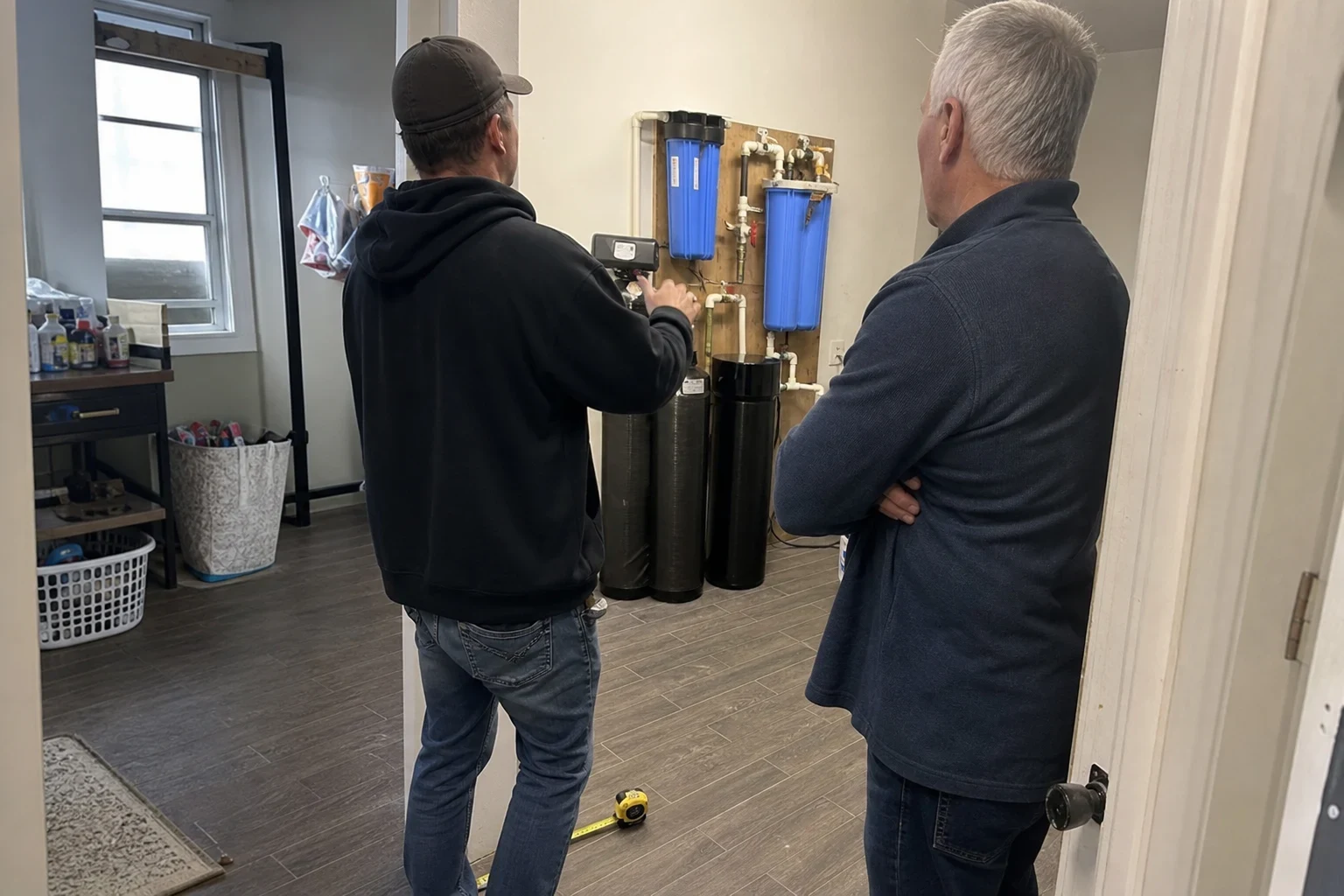
We test your water, check your line pressure and look under the sink for space. You get a clear, written recommendation, including when RO is not the right answer.
- 3
Install day
Most installs take a few hours. We lay down protection, mount the system, add the faucet and connect supply and drain lines, then flush the new filters and check for leaks.
- 4
Taste it with you
Before we leave, you pour a glass and taste it. We set your first filter change reminder and answer any questions about upkeep.
Common under-sink RO questions
Does an RO system waste water?
Some, yes. The membrane sends part of the water to the drain to flush away what it removes. Newer models are more efficient than older ones, and we can go over the ratios when we suggest a system.
How often are filters changed?
Prefilters and the polishing filter usually get replaced every six to twelve months, based on your water use and what your water contains. The membrane generally lasts a few years. If you would rather not track it, our filter replacement and maintenance service changes them on a set rotation.
Will it fit under a sink with a garbage disposal?
In most kitchens it will. We measure the cabinet at the visit, and when room is tight, a compact tankless model or moving the tank usually works.
Does RO take out healthy minerals?
It removes most dissolved minerals together with the things you want gone. People get most of their minerals from food, but if you like the taste of mineral water, a remineralization stage can put some back.
Will I also need a water softener?
Not always. We recommend a softener only when a hardness test shows your water needs one, and many homes are happy with RO alone at the kitchen sink.
Get better drinking water before the heat sets in
Tell us about your kitchen and your water, and we'll set up a visit to test and look at your sink. You'll know exactly what we recommend and why before anything is installed.