ServicesFilter replacement
Filter Replacement and Maintenance in Flower Mound
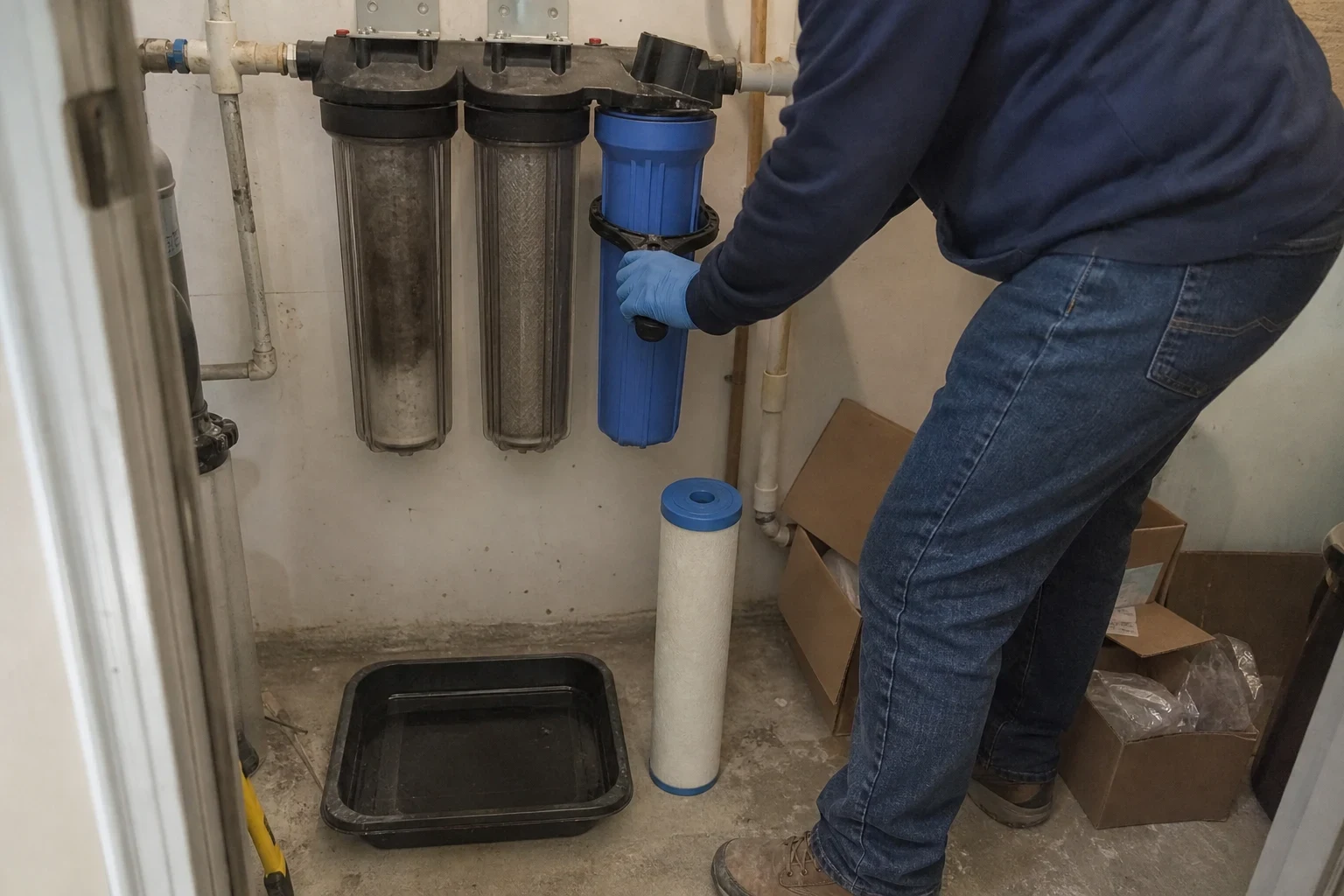
Every filter slows down as it loads up. We replace sediment, carbon and reverse osmosis filters, clean the housings, check your softener and look for small leaks. Then we set your next visit around the season ahead, so your water stays good and your equipment keeps working.
Getting the most from the system you already own
Filters work by trapping things. Month by month, a sediment cartridge packs with grit, a carbon block runs out of room to hold chlorine taste and odor, and a reverse osmosis membrane gradually fouls. That is not a breakdown. It is normal filter behavior, and it is the reason they need regular care.
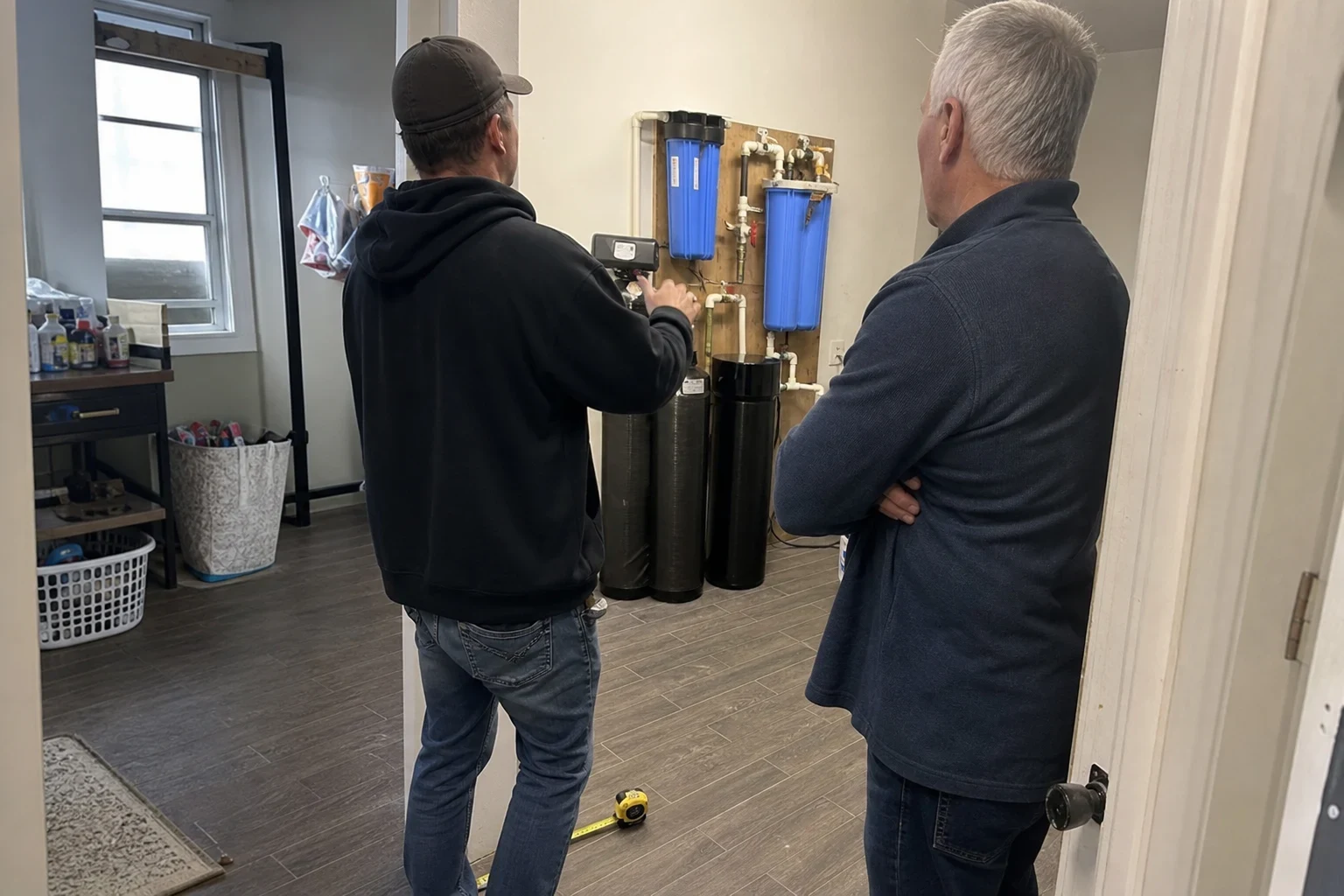
We replace filters and maintain whole-house carbon systems, iron and sediment filters, under-sink reverse osmosis units and water softeners, including ones another company installed. If you do not know what you have or when it was last serviced, that is no problem. We sort it out with you on the first visit.
The idea is straightforward. Each visit is timed to the coming season, so filters are fresh ahead of your home's heaviest water use and equipment gets checked before the cold arrives.
What we do on a maintenance visit
Carbon and sediment cartridge changes
We put in whole-house and point-of-use cartridges in the right size and micron rating for your housings, and we show you the old one so you can see what it trapped.
RO servicing
We replace the pre-filters and post-filter, test the membrane's output and swap it when it is spent. We also check air pressure in the storage tank, a frequent reason for a slow faucet.
Cleaned housings and cared-for O-rings
Each housing is rinsed and sanitized before the new cartridge goes in. O-rings get inspected and coated with food-safe silicone, because a dry or pinched one usually causes slow drips.
Softener review
We check the salt level, break apart any salt bridge in the brine tank and make sure the regeneration settings still suit your household.
Pressure readings and leak inspection
We measure pressure ahead of and after the filters and inspect fittings, valves and bypass lines for any dampness.
Written record and return date
We leave a note listing what we changed and when we suggest coming back, based on your equipment and your household's water use.
How to tell your filters need changing
- Weaker showers than before
- When a cartridge fills with grit and fine particles, less water gets through. A gradual pressure drop across the house usually comes from the filter housing, not the pipes.
- Chlorine taste returns
- Once the carbon is spent, the taste and odor it was catching come back. The change is usually slow, and a glass of ice water is often where you notice it first.
- Slow or odd-tasting RO faucet
- A worn membrane or low tank pressure leaves the drinking faucet trickling or the water tasting flat or strange.
- Stains or hazy water
- Rust-colored marks in sinks or haze in a glass can mean an iron or sediment filter is full and letting particles slip past.
- Nobody remembers the last change
- With no date on the housing and no memory of the last service, it is almost surely overdue, and that alone is a fine reason to call.
How the visit goes
- 1
A quick call about your setup
Tell us what equipment you have, or describe it as best you can. We bring the cartridges that match, and we check fit before we start.
- 2
Water off, floors protected
We shut off the supply to the system, open the bypass if there is one, and put down towels and a drip tray. Your water is usually off only briefly.
- 3
Replace, clean and reassemble
Old cartridges come out, housings are sanitized, O-rings are checked and new filters go in. Carbon filters get flushed so the first water you draw is not cloudy with fines.
- 4
Test before we leave
We bring the system back up slowly, check for leaks and confirm pressure and flow. We take the old filters with us.
- 5
Your next visit, set to the season
We note the date we recommend coming back. Garage-mounted systems in North Texas also get a reminder to protect them before a hard freeze, since a cracked housing is an avoidable repair.
What affects the cost of maintenance
Most of the cost of a maintenance visit is the filters themselves. We tell you what your system needs and why before we replace anything, and we explain the price line by line by phone or on the day.
- How many systems you have
- A single under-sink unit is a short visit. A home with a sediment prefilter, whole-house carbon, a softener and reverse osmosis takes longer and uses more parts.
- Cartridge type
- Standard-size cartridges are widely available. Some systems use proprietary filters that cost more, and a few older brands are hard to source.
- Whether the membrane needs replacing
- Reverse osmosis membranes last much longer than pre-filters, so they are not replaced every visit. When one is spent, it adds to that visit's cost.
- How overdue the system is
- Filters left in too long can leave housings dirty or O-rings brittle, which means a bit more cleaning and a few extra parts.
Questions we hear about keeping filters fresh
- What's the right schedule for swapping my cartridges?
- No single number fits every home, because the type of filter and your daily water use both matter. Sediment cartridges and RO pre-filters commonly need a swap somewhere between six and twelve months, and carbon blocks and membranes usually go longer. Once we see your equipment and hear how your household uses water, we give you an actual date to plan around.
- Can you work on equipment another company put in?
- Most likely. Whole-house carbon, reverse osmosis and softener systems from the common brands take parts we carry or can order. If yours needs a cartridge we can't source, we will say so plainly and go over the choices with you.
- Why do you time visits to the season?
- Your home uses more water in the hot months, so filters load up faster then. Changing them in spring means they start summer fresh. A fall visit lets us check equipment in garages or along outside walls before freezing weather.
- Can I just change the filters myself?
- Many homeowners can, and we are happy to show you how. Most problems we see after a do-it-yourself change come from a pinched O-ring or a wrong cartridge size, which can cause a slow leak. A professional visit also covers the pressure, membrane and softener checks that are easy to skip.
- Will my water be off for long?
- Usually not. On systems with a bypass valve, the rest of your home can keep running water while we work. Without a bypass, the water is off only for the time it takes to swap and reassemble.
- Should I get my water tested too?
- If your water tastes different, or if you have never had it tested, it is worth considering. Water testing tells us whether your current filters still fit your water, or whether a different setup would serve you better.
Get your filters ready for the season ahead
We serve Flower Mound and nearby towns including Highland Village, Lewisville and Southlake. Tell us what equipment you have and we will bring the right parts.